
























Empowering Flow Intelligence for Smarter Industrial Automation

Largest
Solenoid Valve

Manufacturer in India

10M+

Solenoid Valves Supplied

7000+

Customers Served

58+

Years of Experience

6100+

Customized Solutions Developed

13+

International Certifications

81+

Countries Supplied To

83+

Global Authorized Distributors

71,000+

Catalog Solenoid Valves

29+

Utility Patents

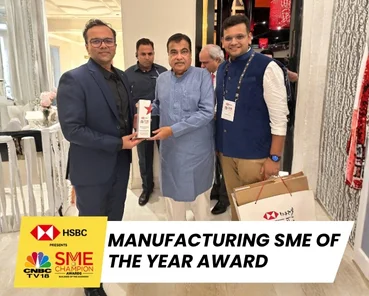
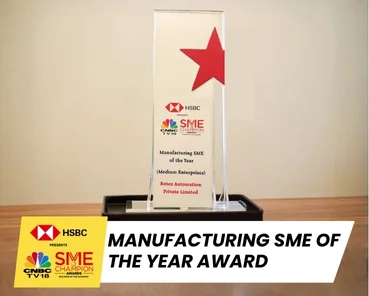
Awards and Recognitions

Our Commitment to Standards

Trusted by Industry Leaders

Industries we Serve

Automotive & Manufacturing

Oil, Gas &
Petrochemical

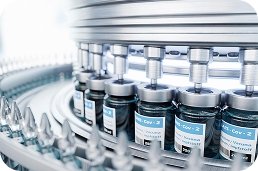
Pharmaceutical & Medical Equipment

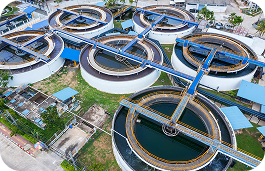
Water & Wastewater Treatment

5 Essential Things You Should Know 
Before Selecting Your Solenoid Valve

Check the Pressure Rating

Ensure the valve’s pressure capacity matches your application requirements.

Review Power Consumption

Understand the power or current allowed in your application — higher power means shorter solenoid life.

Evaluate Pressure Drop

Pressure drop across the valve is critical in identifying the right solenoid valve for your application.

Understanding these fundamentals is critical

Beyond them, additional application parameters also play a
vital role in identifying the right solenoid valve solution.

Additional Application Parameters to Consider

If you’re currently using any solenoid valve, evaluate it carefully against the above parameters to
ensure it’s optimally chosen for your application’s performance and reliability.

Frequently Asked Questions

Normally Close solenoid valve gets open when energized and closes when de-energized. Normally Open is opposite of the same.

https://shahniravoo7-flowcal-0xon.bolt.hostGeneral thumb rule is if there is no downstream restriction pressure drop across the valve = inlet pressure. But if there are downstream restriction (example Nozzles, sprinklers etc) then one needs expert advice as valve choice will heavily impact your system output and cost involve. Minimizing pressure drop many times makes solution unnecessarily costly at the same time right balance is must  for optimizing performance and cost. We recommend expert advice by contacting us at XXXXXXXXX or email us at absdc@rotexautomation.com to guide you further.

** In case your application is not a constant flow but fill or drain type i.e. for you time to fill gaseous media in a container or exhausting it, is important you need to contact expert as it needs advance software simulation to arrive to most optimum solution for your requirement.

This can be actual minimum operating pressure but most importantly this refers to minimum pressure drop across the valve we can have. The software provides pressure drop at given flow which can be minimum operating pressure for your application (here at lowest possible flow requirement this value needs to be derived). Now in cases there are no downstream restriction then this can be minimum inlet pressure valve will see.

Above software will give Orifice size as output as per the same* one can choose most optimum nearby port connection size
Common Port connection sizes: 1/8”, ¼”, ½”, ¾”, 1”, 1.5”, 2”, 2.5”, 3”, 4”
Port Connection type: Internal Threaded with BSP or NPT threads, Flange Connection Class 150 or 300, But weld etc
* if orifice size requirement is 5 mm then ¼” or 10 mm then ¾” or ½”

there are solenoid valves which may see flammable gas in environment occasionally or even continuous basis at such scenario a special explosion proof or Flame proof solenoid valves required (Ex d or Ex ia) Ex Solenoid valves in Refineries, Fertilizer plants,  Some chemical plants, some area of Power plants etc. Also some of the process Critical operation needs SIL 3 rated solenoid valves for high reliability assurance. So one needs to understand whether one needs such SIL3 capability in the solenoid valve for such application.

Choose the seals and body material as per the media flowing through the valve. One can use following software for deciding the same
https://smart-material-match.lovable.app/

This can be important required in some application where in case of solenoid failure or power failure temporarily solenoid valve needs to be operated with manual operation ex pressing of button or push and turn of the knob. In safety critical this sort function can be dangerous as it has chance of bypassing the solenoid valve operation and thus it is must to define not to have this function and many valves provide this function as default while other needs to be asked for.

there are multiple solenoid valve voltage options avail like 24V DC, 220V 50Hz, 12V DC, 110V 60Hz. Apart from these there are many other special operation voltages like 24V 50Hz, 220V DC, 48V DC, 440V DC etc

As per point of application of the valve one need decide minimum ingress protection requirement i.e IP65, IP66 or IP 67. Please refer link here for detail information on various IP protection

Explosion proof certifications: PESO, ATEX, IECeX, INMETRO, UL etc Weatherproof certifications: CE, NEMA4, EAC etc

There Are 34 Distinct Parameters to Consider When Selecting the Most Suitable Solenoid Valve
for Your Specific Application. We’ve Covered Some Key Parameters in Detail.

Still searching for a solenoid valve
manufacturer offering certified products
and on-time delivery? Your search ends here.

Get in Touch

Still searching for a solenoid valve
manufacturer offering certified products
and on-time delivery? Your search ends here.

Rotex Automation Limited
987/11, GIDC Makarpura,
Vadodara-390010, Gujarat, India.